United States

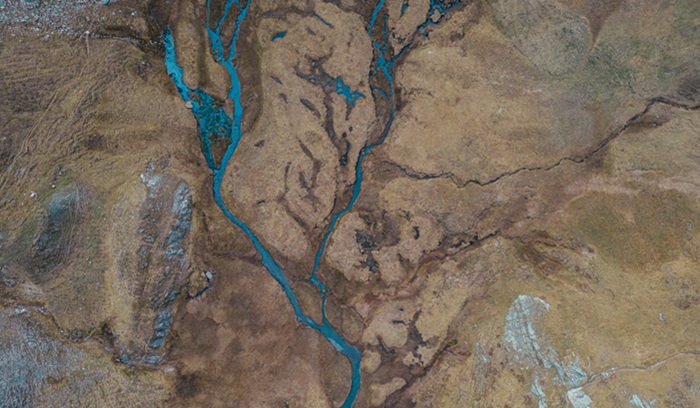
Aerial view of river

250 miles of New Mexico’s rivers get toughest safeguards against pollution

In a unanimous decision, New Mexico’s Water Quality Control Commission has voted to protect 250 miles of stream and river segments with the state’s highest water quality safeguards. This historic decision recognizes stretches of the Rio Grande, Rio Chama, Cimarron, Pecos, and Jemez rivers as Outstanding National Resource Waters, ensuring that these lifelines remain uncontaminated by pollution. The 10-0 vote shields these critical ecosystems from degradation caused by pollutants, heavy metals, temperature changes, and other environmental threats.


Ovarian and Cervical Cancer Awareness. a Teal Ribbon

Cervical cancer deaths are plummeting among young U.S. women

Every year, thousands of American women die of cervical cancer. However, from 1992 to 2015, the number of deaths due to cervical cancer among U.S. women under the age of 25 fell steadily from each three-year period to the next, dropping roughly 75% altogether over that span. The sharp decline in cervical cancer deaths is likely due, at least in part, to the widespread introduction of the HPV vaccine in 2006.

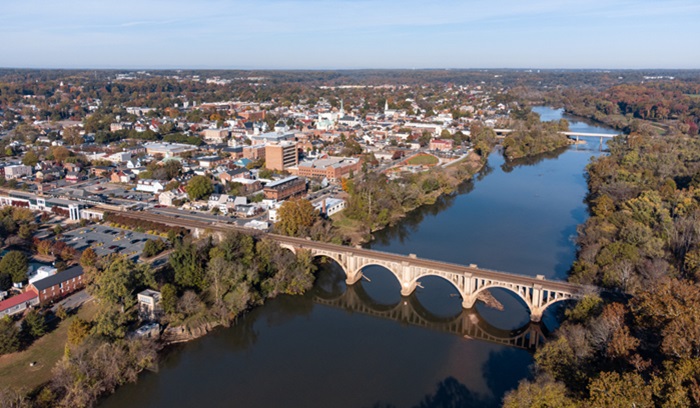
A Aerial Photo Of Fredericksburg Va on a clear fall day

Rappahannock Tribe first in U.S. to enshrine rights of nature into constitution

The Rappahannock Tribe in Virginia has become the first tribal nation in the U.S. to adopt a tribal constitution that grants legal rights to a river, specifically protecting the Rappahannock River’s rights to exist, flourish, and maintain clean water. The provisions allows legal cases on behalf of the river itself, with a tribal court system planned for 2025 to enforce these rights. The Rappahannock’s actions are part of a rights-of-nature movement that includes Ecuador’s constitutional recognition of these rights in 2008 and New Zealand granting legal personhood to the Whanganui River in 2017.

MIT building

MIT will make tuition free for families earning less than $200,000 a year

Families making under $100,000 will not have to pay housing, dining or other fees, and they’ll have an allowance for books and other personal expenses. Families who make Families of students at the Massachusetts Institute of Technology (MIT) making under $100,000 will not have to pay housing, dining, or other fees, and they’ll have an allowance for books and other personal expenses. Families who make more than $200,000 a year can still receive need-based financial aid. Tuition for the 2024-2025 academic year at MIT is nearly $62,000. Housing, dining, and other fees can add up to another $24,000 annually, making it an enormous burden for families or forcing students to go into decades of debt.

Breakthrough genomic test identifies virtually any infection in one go

Researchers at University of California San Francisco (UCSF) have developed a single genomic test that can quickly detect virtually any kind of pathogen in a patient. This allows for much quicker diagnoses, enables targeted treatment to begin sooner, and could lower healthcare costs. Over the course of 7 years, researchers led by UCSF professor Charles Chiu tested 4,828 patients’ samples with its clinical mNGS method. The mNGS test accurately identified 86% of neurological infections.

Sea turtle swimming

Local groups drive creation of new Puerto Rico marine protected area

The marine protected area (MPA), named Jardines Submarinos de Vega Baja y Manatí or the Vega Baja and Manatí Underwater Gardens, spans 77 square miles and is the culmination of a 16-year effort by ­­a coalition of local communities and NGOs. It’s comprised of several critically important ecosystems, including coral reefs, mangrove forests, and seagrass beds, and is home to more than a dozen threatened species, including the greater Caribbean manatee and several species of sea turtles.

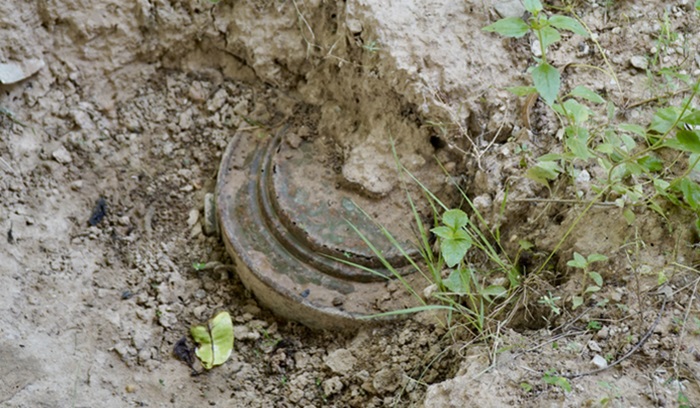
Landmine

Groundbreaking laser tech enables faster, safer landmine detection

Researchers at the University of Mississippi have come up with a faster, more efficient method for detecting landmines – millions of which pose a lethal threat to people in war-ravaged countries all over the world. That could spell a safer future for people who live in 70 current and former war-torn countries around the world that are riddled with an estimated 110 million active landmines. These explosives caused 2,793 deaths globally in 2017, and that number tragically rose to 4,710 in 2022.

Missouri voters approve ballot measure to expand abortion rights

Missouri banned almost all abortions after the U.S. Supreme Court overturned Roe v. Wade in 2022. The state’s current law is considered one of the most strict in the country, though it makes exceptions to protect the life of the mother, and for medical emergencies. The new amendment, which required a simple majority to pass, now removes the state’s ban on abortion and protects abortion rights up to fetal viability, around the 24th week of pregnancy, with exceptions afterward to protect the life or health of the woman.

Female politician at podium

Women have won 60 seats in the New Mexico Legislature to secure the largest female legislative majority in U.S. history

New Mexico voters are sending 11 additional women to boost female representation in their state legislature. Women have made steady advances in statehouse representation across the country, with one notable surge in the 2018 election cycle almost entirely among Democrats in a trend associated with the #MeToo movement and political engagement linked to the election of Donald Trump. The share of women in all state legislatures across the United States combined roughly tripled from about 11% in 1980 to 33% in October 2024.