United States

Man clutching his chest from acute pain

New heart attack detector gives results in minutes, not hours

Someone presenting to the emergency room with a suspected heart attack will undergo a number of standard blood tests to determine heart muscle damage. The problem is that it can take one or two hours to receive the results. Now, Johns Hopkins University researchers have led the design of a tiny chip that diagnoses heart attack by detecting these important biomarkers in minutes rather than hours, even if they are present at very low concentrations. The researchers foresee an at-home heart attack detector in the future.

Good news for LGBTQ rights

More than 800 U.S. military veterans receive honorable discharges from Pentagon’s “don’t ask, don’t tell” records review

More than 800 veterans from the U.S. military who were kicked out of the military for their sexual orientation under a policy that banned gays and lesbians from openly serving, known as “don’t ask, don’t tell,” will receive honorable discharges, Secretary of Defense Lloyd J. Austin has announced. An honorable discharge status unlocks access to benefits that some of these veterans may have been missing out on for decades, including things like health care, college tuition assistance, VA loan programs, and even some jobs.

Birds flying at the beach on a sunny day

California gets final approval for nation’s third-largest marine sanctuary

A new 4,543-square-mile area off a gorgeous and ecologically rich stretch of the California coast has achieved federal protection. The Chumash Heritage National Marine Sanctuary was officially designated Friday along 116 miles of the coast in the San Luis Obispo and Santa Barbara counties. Created by the National Oceanic and Atmospheric Administration, it is the country’s third-largest marine sanctuary. It is also first designed with the involvement of Indigenous groups and the first in 30 years in California.

Metal pipes

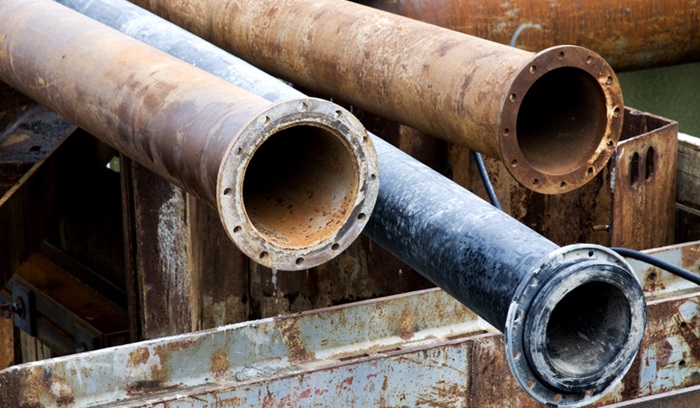
U.S. announces 10-year deadline to remove all lead pipes nationwide

President Biden has announced $2.6 billion in funding to replace all lead pipes in the United States as part of a new EPA rule that will require lead pipes to be identified and replaced within 10 years using the new funding from the Bipartisan Infrastructure Act. The EPA estimates that nine million homes in the U.S. still have lead pipes. “Studies show … communities of color have been the hardest hit,” Mr. Biden said. “One study showed Black children were at least two times more likely to have elevated levels of lead in their blood than children of other racial groups. We have an obligation to make things right.”

Pollution from industrial facility

Study finds mercury pollution from human activities is declining

In a new study from the Massachusetts Institute of Technology, researchers analyzed measurements from all available monitoring stations in the Northern Hemisphere and found that atmospheric concentrations of mercury declined by about 10% between 2005 and 2020. They used two separate modeling methods to determine what is driving that trend. Both techniques pointed to a decline in mercury emissions from human activity as the most likely cause.

World Health Organization approves first mpox diagnostic test for emergency use

Mpox, previously known as monkeypox, is an infectious disease caused by the monkeypox virus. A global outbreak first emerged in May 2022 which WHO said constituted a public health emergency of international concern – the highest level of alarm under international health law. Africa has seen an unprecedented increase and expansion in mpox cases this year, with transmission mainly centered in the Democratic Republic of the Congo. WHO said early diagnosis is critical as it enables timely treatment and care, as well as control of the virus. A new test from Abbott Molecular now makes that much more possible.

Neurons inside human brain

Synapse-restoring pill set for human trials as novel schizophrenia treatment

Spinogenix is the American company behind the once-a-day pill that restored lost nerve cell connections in people with amyotrophic lateral sclerosis (ALS). Having been granted approval from the Australia Human Research Ethics Committee (HREC), it is now actively enrolling participants for its Phase 2 clinical trial to evaluate the safety, effectiveness, tolerability, and pharmacodynamics of once-a-day SPG302 as a treatment for schizophrenia.

Guam Kingfisher

‘Extinct’ Guam kingfisher takes flight again after nearly 40 years

Six Guam kingfishers, known locally as sihek, have been released into the wild, marking their return from nearly four decades of being extinct in the wild. Sihek became extinct in the wild from their native Guam in 1986 due to the introduction of the brown tree snake, but a captive-breeding program has kept the species alive since then. This release, on the predator-free Palmyra Atoll, about 3,700 miles east of Guam, is part of a larger plan to establish a breeding population there, with the ultimate goal of returning the sihek to Guam once the threat from brown tree snakes is addressed.

Nervous Swans in the Rice Fields

California tears down levee in ‘largest tidal habitat restoration in state history’

A backhoe loader has dug into a levee in the Sacramento-San Joaquin Delta, breaking down a portion of the earthen embankment and allowing tidal waters to flow across 3,400 acres of land for the first time in 100 years, officials said. The plot of land, located in Solano County and just upriver from Rio Vista, is being called Lookout Slough, and it will provide new habitat for fish and wildlife and increase flood protection for the greater Sacramento area by boosting water storage capacity in the Yolo Bypass.

Women feeling lonely and sad

Washington State considers rape kit backlog ‘essentially eliminated’ 30,000 tests later

In a moment Washington state officials say has been a long time coming, the state’s crime lab in Vancouver is declaring its sexual assault kit testing backlog “essentially eliminated.” Over the past decade, the lab has tested more than 30,000 kits. In 2019, House Bill 1166 required rape kits to be tested within 45 days as of May 2022. Today, the Washington State Patrol’s Vancouver Crime Lab reports 95% of kits are tested and DNA entered into a database in 45 days.