
Liu Beng founds the Han Dynasty in China
Spanning over four centuries, the Han dynasty is considered a golden age in Chinese history, and influenced the identity of the Chinese civilization ever since.

Spanning over four centuries, the Han dynasty is considered a golden age in Chinese history, and influenced the identity of the Chinese civilization ever since.

The network was used regularly from 130 B.C.E., when the Han Dynasty of China officially opened trade with the west, to 1453 C.E., when the Ottoman Empire boycotted trade with the west and closed the routes.

Used in Ancient China as early as the Qin dynasty or before, compasses were originally developed for aligning buildings with directions and as a tool used in fortune telling.

The Great Wall of China is an ancient series of walls and fortifications, totaling more than 13,000 miles in length, located in northern China. Perhaps the most recognizable symbol of China and its long and vivid history, the Great Wall was originally conceived by Emperor Qin Shi Huang in the third century B.C. as a means of preventing incursions from barbarian nomads. To this day, construction of the “Wan Li Chang Cheng,” or 10,000-Li-Long Wall, is one of the most ambitious building projects ever undertaken by any civilization.

A series of victories by the state of Qin towards the end of the Warring States period resulted in their complete conquest of China in 221 B.C.E. when the Qin empire unified China for the first time in its history.

The first recorded use of kombucha comes from China in 221 B.C.E. during the Tsin Dynasty.

The mysterious Laozi’s ancient wisdom may be hard to translate, but the meaning is clear — learning to be self-aware could improve modern life.

Gears almost always produce a change in torque, creating a mechanical advantage, through their gear ratio, and thus may be considered a simple machine.

Invented in the Han Dynasty, cuju is recognized by FIFA as the earliest form of association football for which there is evidence, being first mentioned as an exercise in a Chinese military work from 3rd-2nd century B.C.E.
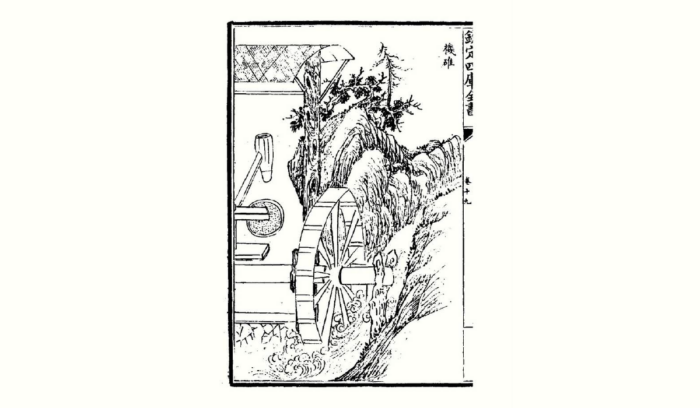
A trip hammer, also known as a tilt hammer or helve hammer, is a massive powered hammer used in agriculture, mining, finery forges, and a variety of other applications.