
Homo sapiens settle the Korean peninsula for the first time
The earliest radiocarbon dates for the Paleolithic indicate the antiquity of occupation on the Korean peninsula is between 40,000 and 30,000 BP.

The earliest radiocarbon dates for the Paleolithic indicate the antiquity of occupation on the Korean peninsula is between 40,000 and 30,000 BP.

Japan was then connected to mainland Asia by at least one land bridge, and nomadic hunter-gatherers crossed to Japan.

By around 30,000 years ago, Australo-Melanesians were present in all regions of Southeast Asia. In most lands they were eventually displaced from the coastal lowlands and pushed to the uplands and hinterlands by later immigrants.

The earliest direct evidence of Homo sapiens on Britain is a jaw fragment found in Kent’s Cavern, Devon estimated it to be at least 40,000 years old.

The human presence on the island dates back at least 40,000 years, to the oldest homo sapiens migrations out of Africa.

Evidence indicates the presence of Aborigines in Tasmania about 40,000 years ago. Rising sea levels cut Tasmania off from mainland Australia about 10,000 years ago and by the time of European contact, the Aboriginal people in Tasmania had nine major nations, or ethnic groups

Archaeological evidence suggests that human beings arrived in Sarawak – overland – at least 40,000 years ago.
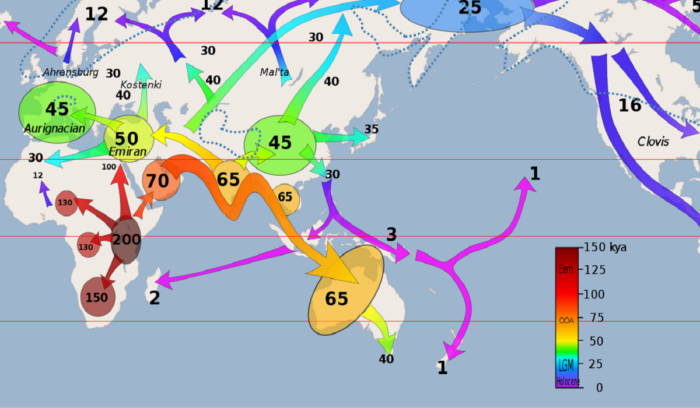
Early Homo sapiens settling the Arabian Peninsula demonstrated exceptional ingenuity by mastering abstract climate models and deep planning. Migrating through “Green Arabia” between 130,000 and 75,000 years ago, these pioneers developed resilient technologies and social cohesion, proving critical for their successful global dispersal.