Humans in modern-day Europe invent flatbread
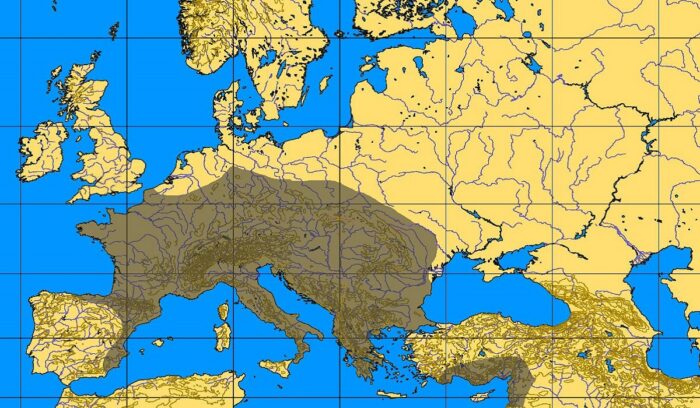
Starch grains found on grinding stones suggest that prehistoric man may have consumed a type of bread at least 30,000 years ago in Europe, US researchers said.
Cro-Magnon entered Eurasia by the Zagros Mountains around 50,000 years ago, with one group rapidly settling coastal areas around the Indian Ocean and another migrating north to the steppes of Central Asia.
Dancing as self-expression probably developed perhaps as early as speech and language and almost certainly by the time people were painting on cave walls, making clay figurines and decorating their bodies with ornaments.
A microlith is a small stone tool usually made of flint or chert and typically a centimetre or so in length and half a centimetre wide.
Mortar and pestle are implements used since ancient times to prepare ingredients or substances by crushing and grinding them into a fine paste or powder in the kitchen, medicine and pharmacy.
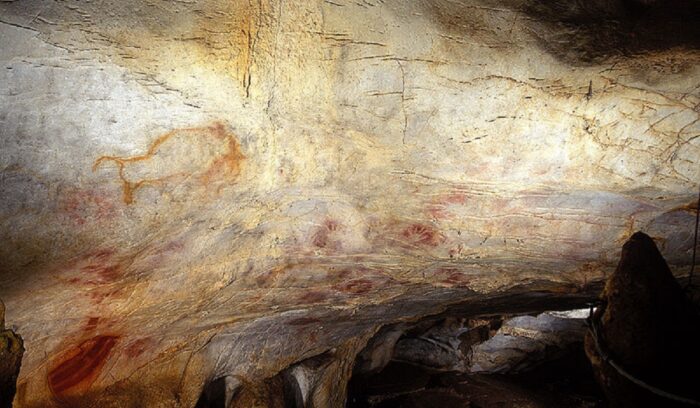
One motif – a faint red dot – at El Castillo Cave in Spain is said to be more than 40,000 years old.
Isotopic analysis of the skeletal remains of Tianyuan man, a 40,000-year-old modern human from eastern Asia, has shown that he regularly consumed freshwater fish.
The oldest tally sticks date to between 35,000 and 25,000 years ago, in the form of notched bones found in the context of the European Aurignacian to Gravettian and in Africa’s Late Stone Age.
The Griffith University professor Maxime Aubert and his team were able to determine that the Sulawesi paintings are, at minimum, 39,900 years old.
The world’s oldest fish hook has been unearthed at a site in East Timor, alongside evidence that modern humans were catching fish from the open ocean as far back as 42,000 years ago.