Kerma culture flourishes in modern-day Sudan
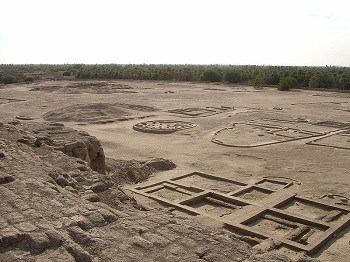
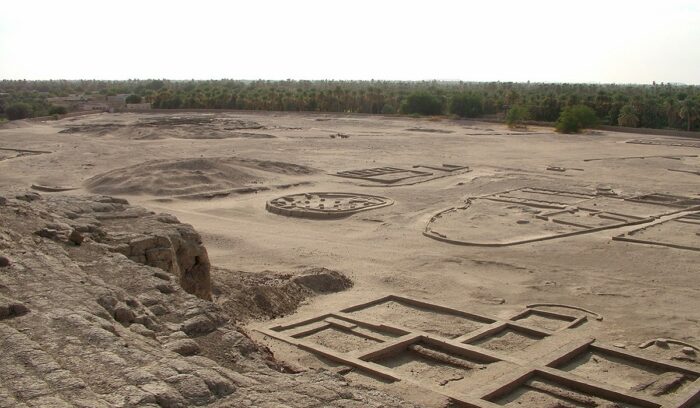
The Kerma culture was an early civilization centered in Kerma, Sudan. It flourished from around 2500 B.C.E. to 1500 B.C.E. in ancient Nubia, located in Upper Egypt and northern Sudan.
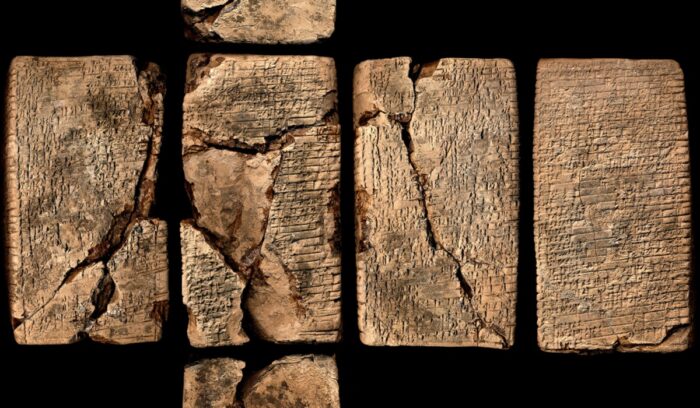
Two of the oldest known literary works are the “Kesh Temple Hymn” and the “Instructions of Shuruppak,” both of which exist in written versions dating to around 2500 B.C.E.
The earliest known docks were those discovered in Wadi al-Jarf, an ancient Egyptian harbor dating from 2500 B.C.E. located on the Red Sea coast.
Black pepper is native to Kerala in Southwestern India and is extensively cultivated there and elsewhere in tropica regions.
Papyrus is first known to have been used in ancient Egypt (at least as far back as the First Dynasty), as the papyrus plant was once abundant across the Nile Delta. Apart from a writing material, ancient Egyptians employed papyrus in the construction of other artifacts, such as reed boats, mats, rope, sandals, and baskets.
Sumeria was the first civilization, created the first writing system, and had the first monarch.
The Maya Long Count Calendar gives a Maya creation date of 11 August, 3114 B.C.E., and traces of Maya habitation at Cuello, in Belize, were recently carbon dated to around 2600 B.C.E.
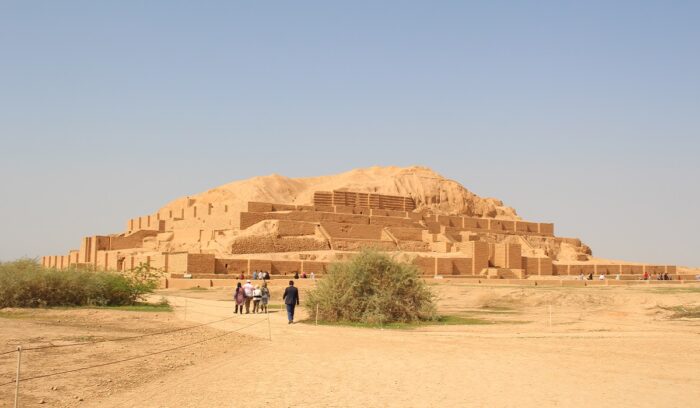
Elam was an ancient Pre-Iranian civilization centered in the far west and southwest of what is now modern-day Iran.
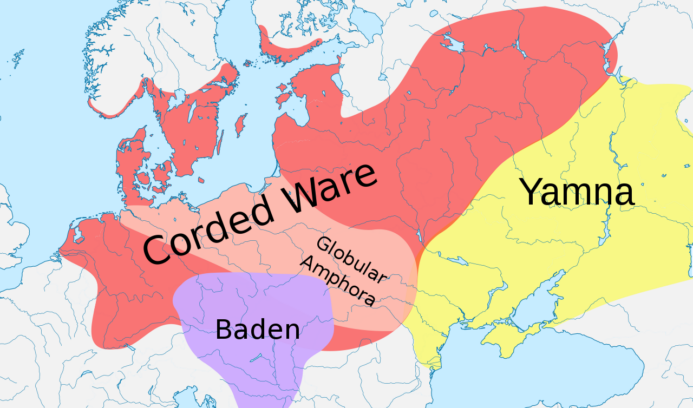
Corded Ware culture encompassed a vast area, from the contact zone between the Yamnaya culture and the Corded Ware culture in south Central Europe, to the Rhine on the west and the Volga in the east, occupying parts of Northern Europe, Central Europe and Eastern Europe.
The Catacomb culture (c. 2800–2200 B.C.E.) is a group of related cultures in the early Bronze Age occupying essentially what is present-day eastern Ukraine and southern Russia.