No coal

Smokestacks polluting

New England’s last coal plant closes permanently

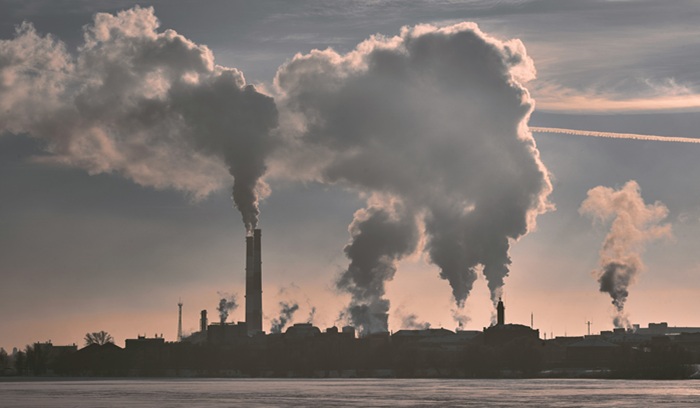
New England has secured a major win for the environment by officially going coal-free. The permanent closure of New Hampshire’s Merrimack Station, the region’s last coal plant, ends a major source of air pollution and CO2 emissions. This transition, enabled by strong investment in natural gas, wind, and solar capacity, proves that industrial economies can successfully retire large fossil fuel assets without compromising energy security. The move delivers significant public health benefits and sets a clear standard for climate leadership.

Solar farm

Solar was E.U.’s biggest source of power for the first time ever in June 2025

At least 13 E.U. countries saw solar output hit a new monthly high in June, according to an analysis from energy think tank Ember. Solar amounted to more than 40% of generation in the Netherlands and 35% in Greece. Coal generated just 6 percent of electricity, a new monthly low. Fifteen E.U. countries are now coal-free, including Austria, Belgium, and Ireland. Analysts say that the June surge in solar power helped Europe weather a brutal heat wave, which saw temperatures soar upwards of 110 degrees F Analysts say that the June surge in solar power helped Europe weather a brutal heat wave.

Air pollution from a coal plant

Global mercury emissions have fallen 70% over last four decades

Gold mining, coal burning, and cement and nonferrous metals production all release several thousand tons of mercury into the atmosphere every year, leading to tens of thousands of deaths worldwide. However, a team of Chinese scientists from schools in Tianjin, Beijing, Tibet, and Nanjing has found that mercury concentrations in the atmosphere have reduced by a staggering 70% since a peak in the year 2000.

Irish flags

Ireland shuts down its last coal-fired power plant

Ireland has become the 15th coal-free country in Europe, having ended coal power generation at its 915 MW Moneypoint coal plant in County Clare. Initially commissioned in the mid-1980s by ESB, Moneypoint was intended to help Ireland offset the impact of the oil crises in the 1970s by providing a dependable source of energy. But with Ireland now generating a lot more renewable energy, coal burning is no longer such an urgent need.

Coal plant on the water

No new coal plants planned for South America for the first time since the 1800s

When the Paris Agreement was signed in 2015, South America had eighteen coal-fired plants on the drawing board, reflecting global uncertainty about the role coal would play in powering emerging economies. Today, that uncertainty has vanished. Coal, once perceived as a staple of industrialization and economic stability, has essentially vanished from the continent’s energy future.

Warsaw, Poland

Coal produces less than half of Poland’s power for first time since 1800s

According to a report by Forum Energii, an energy think tank, electricity produced from coal in April 2025 amounted to 6.5 terawatt-hours (TWh), accounting for 49.4% of the total energy mix. This represents an 18.9% decrease from March and a 9.6% drop compared to the same month in 2024. Forum Energii described recent changes in the electricity mix as “unprecedented”, noting that the use of coal had fallen by 29.9 percentage points between April 2015 and April 2025.

Finnish flags

Finland has effectively phased out coal as a source of electricity generation

The closure of a coal power plant in Finland today brings the country to the brink of a full coal phase-out – four years ahead of schedule. Power utility company Helen officially decommissioned its Salmisaari plant in Helsinki on 1 April, dropping coal to a less than 1% share of the country’s energy mix. Since 2020, coal generation has dropped by 73% from 2.44 terawatt hours to 0.67. Over the same span, wind power has more than doubled since 2020 to supply a quarter of the country’s energy.

Power plant polluting

New York to fine fossil fuel companies $75 billion under new climate law

New York state will fine fossil fuel companies a total of $75 billion over the next 25 years to pay for damage caused to the climate under a bill Governor Kathy Hochul signed into law at the end of 2024.
New York state will fine fossil fuel companies $75 billion over the next 25 years to pay for damage caused to the climate. The new law is intended to shift some of the recovery and adaptation costs of climate change from individual taxpayers to oil, gas, and coal companies. The money raised will be spent on mitigating the impacts of climate change, including adapting roads, transit, water and sewage systems, buildings and other infrastructure. Fossil fuel companies will be fined based on the amount of greenhouse gases they emitted between 2000 and 2018.

Coal

Indonesia aims to phase out all coal-fired and fossil fuel power plants by 2040

Indonesian president Prabowo Subianto has announced his country will seek to phase out all coal-fired and fossil fuel power plants by 2040, pairing the goal with a target to build over 75 GW of renewable energy capacity over the same period. This brings forward Indonesia’s goal of retiring coal-fired power plants from 2056 to 2040. As the world’s fifth-largest operator of coal-fired power capacity at 52.3 GW, Indonesia’s promise to transition completely away from coal could serve as a pivotal step towards global decarbonization if implemented as planned.