
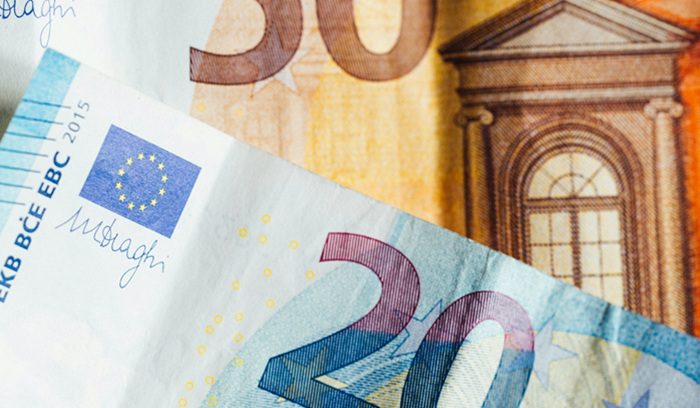
Germany’s Minimum Wage Commission voted Friday to lift the country’s statutory pay floor in two steps — from €12.82 per hour today to €13.90 in January 2026, then to €14.60 by January 2027. The cumulative increase of nearly 14% would push a full-time worker’s monthly earnings to close to €2,500, placing Germany second in the European Union for minimum wage levels, trailing only Luxembourg.
At a glance
- Germany minimum wage: The two-step increase moves the pay floor from €12.82 to €13.90 in 2026, then to €14.60 in 2027 — a combined gain of nearly €1.78 per hour.
- EU wage benchmark: Germany will hold the second-highest minimum wage in the EU after Luxembourg, ahead of Belgium, the Netherlands, and Ireland — all of which clear €2,000 per month.
- Commission structure: The Minimum Wage Commission includes top representatives from trade unions and employer groups, voting every two years based on income growth data — a social partnership model that keeps wage decisions insulated from short-term political cycles.
Why this increase matters
For workers at the lower end of the pay scale, the difference between a formula and a political promise shows up in a bank account every month. Germany’s Federal Ministry of Labour and Social Affairs confirms that the statutory minimum wage applies to virtually every employer in every sector, making the protection nationwide and essentially universal.
Low-income households typically spend additional wages quickly and locally. That means the boost doesn’t stay in individual pockets — it circulates through neighborhoods as increased consumer demand, supporting small businesses and local services.
The announcement also carries political weight. The Social Democrats campaigned on raising the minimum wage ahead of February’s election, and now govern as the junior coalition partner with the center-right CDU. CDU general secretary Carsten Linnemann called the commission’s consensus a sign that “social partnership in action” still works — a rare moment of cross-party agreement on a labor question.
What the evidence says about risk
Critics of minimum wage increases routinely warn of job losses, especially in sectors relying on lower-skill labor. Germany’s own history is instructive here. When the country introduced its first statutory minimum wage in 2015, significant disruption was widely predicted. Research from institutions including the Kiel Institute for the World Economy found that employment effects were negligible — firms adjusted through efficiency gains and modest price increases rather than large-scale cuts.
That track record gives reasonable grounds for confidence that this next increase will follow a similar pattern. Still, some very small employers in lower-wage regions may face genuine pressure, and careful monitoring of those sectors will remain important.
A European model taking shape
What distinguishes this round of increases is the explicit alignment with the EU’s Minimum Wage Directive, adopted in 2022, which defines adequate pay as at least 60% of the national median wage. By anchoring Germany’s floor to that standard, the commission is embedding a principle of adequacy — the idea that a minimum wage should allow a worker to participate meaningfully in the economy, not simply survive at its edges.
Formula-based approaches of this kind tend to be more durable than ad hoc political negotiations, according to Social Europe, which tracks labor policy across the continent. Once a benchmark is institutionalized, it becomes harder for any government to quietly erode.
For the roughly four million workers in Germany who currently earn at or near the minimum wage, that durability is not a policy detail. It is the difference between a living standard that holds and one that quietly slips backward when no one is watching.
Read more
For more on this story, see: DW — Germany to raise minimum wage to €14.60 by 2027
For more from Good News for Humankind, see:
- Renewables now make up at least 49% of global power capacity
- Marie-Louise Eta becomes the first female head coach in men’s top-flight European football
- The Good News for Humankind archive on economy
About this article
- 🤖 This article is AI-generated, based on a framework created by Peter Schulte.
- 🌍 It aims to be inspirational but clear-eyed, accurate, and evidence-based, and grounded in care for the Earth, peace and belonging for all, and human evolution.
- 💬 Leave your notes and suggestions in the comments below — I will do my best to review and implement where appropriate.
- ✉️ One verified piece of good news, one insight from Antihero Project, every weekday morning. Subscribe free.